Technology is transforming the appliance industry at a rate no one expected, and kitchen appliances are no exception. As brands continue to innovate, induction cooktops and ranges are becoming more widely available and much more affordable. I’m sure you’ve seen induction ranges mentioned alongside gas and electric range options, but what is the difference? Is it just another trend, or is it really a better way to cook?
For months my husband has been begging to upgrade our electric range to an induction model, and if you’re anything like me, you’re probably hesitant about trying out new technology on your large appliances. If you find yourself in the same predicament, this article will break it all down for you. Finally, you’ll have the confidence to decide whether induction is the right upgrade for your kitchen.
Induction Cooking Explained
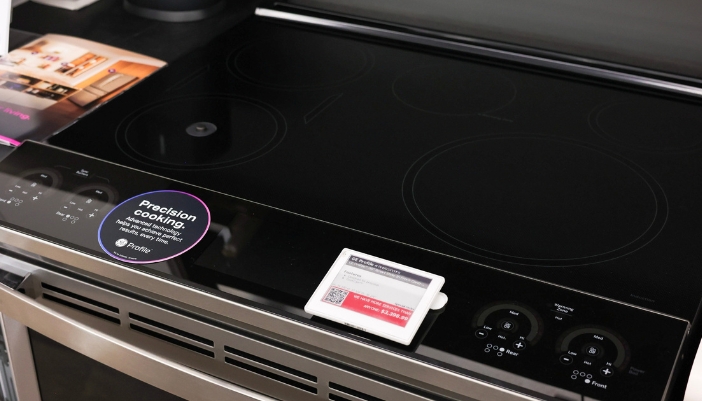
Induction cooking is a type of electric cooking technology, but it works much differently than the radiant electric cooktops you’re probably used to. Instead of heating the cooktop surface itself, induction uses electromagnetic energy to directly heat the cookware. When an induction-compatible pan is placed on the surface, a magnetic field causes the cookware to heat up almost instantly, while the cooktop remains cool.
In a traditional electric cooktop, heated coils under a glass-ceramic surface heats up, and then transfers the heat to the pan that’s placed overtop the burner. Electric cooktops take longer to heat up, use more energy, and often result in uneven temperatures in your pan. Induction heats the pan directly, meaning it’s faster, uses less energy, and it’s an even spread of heat.
Benefits
Energy Efficient
One of the biggest advantages of induction cooking is the energy efficiency. Because the heat is generated directly in the cookware, very little energy is lost to the surrounding air. Over time, this efficiency can mean lower energy bills over time, especially for those households who cook quite a bit. Believe it or not, the U.S. Department of Energy states that induction cooktops are more efficient than both their electric and gas counterparts.
Better Air Quality
Unlike gas ranges, induction cooktops don’t have an open flame, so there are no combustion byproducts to worry about. You will never need to worry about any air pollutants being released into your kitchen. This was a big benefit in our home as someone with multiple pets and a husband with asthma.
Faster, More Consistent Cooking
If there’s one thing about my old range that really bothered me, it was waiting for water to boil. It felt like it took forever to heat a large pot of water. With induction, I am still shocked at how fast the water reaches its boiling point. Induction cooktops heat incredibly fast, often boiling water in nearly half the time of traditional electric models. Induction also excels at consistency. Temperature changes are immediate, which allows for precise control that’s ideal for delicate tasks like simmering sauces or melting chocolate.
Easier to Clean
Because the cooktop surface doesn’t get as hot as a traditional electric range, spills are much less likely to burn onto the surface. Honestly, this is probably my favorite thing about induction. You don’t have to wait for the surface to cool down before cleaning it, and you don’t need to break out a razor blade to scrape burnt remains from the glass. The ease of cleaning an induction cooktop is not only a huge benefit, but it’s also a huge time saver.
Enhanced Safety
If you’re someone with curious pets or children around, you know how cooking can sometimes be an extra careful task. The last thing you want is a little paw or hand touching a hot burner. Thankfully with induction, you don’t have to worry about the possibility of accidental burns since the cooktop itself doesn’t generate any heat (unless compatible cookware is present). Many newer models also include automatic shut-off, pan detection, and child safety locks, making induction even safer.
Difference/Setbacks
While induction cooking offers many advantages, it’s important to be transparent with any new technology. Before making the decision to purchase an induction range, make sure to carefully consider the following:
- Higher Costs: Because induction technology is on the newer side (as opposed to traditional electric coil technology or gas ranges), many induction ranges and cooktops often have a higher up-front cost to their traditional counterparts.
- Needs Compatible Cookware: One major consideration when upgrading to induction cooking is whether your current cookware will work with the electromagnetic energy. If your pots and pans aren’t rated for an induction cooktop, you could be looking at an additional cost to replace or upgrade your cookware.
- TIP: Grab one of your fridge magnets and stick it to the bottom of your current pots and pans. If it sticks, your cookware should work on an induction cooktop!
- Learning Curve: If you’re used to traditional electric or gas ranges, it might take some time and practice to re-teach yourself how to cook properly on an induction stove. While it’s not something you have to study extensively, there’s a good possibility that it could take a few tries before perfecting your favorite recipes again.
- Delicate Cooktops: Models with more delicate glass cooktops can experience more wear over time (as opposed to models with a ceramic-glass top). Dragging pots and pans across the glass makes it more likely to scratch or scuff over time, so it’s important to treat induction cooktops gently and with a little extra care.
Induction FAQs
- Do I need special cookware?
- Yes. Induction cooktops do require pots and pans that are magnetic. Cast iron and stainless-steel pans work well, while aluminum, copper, and glass typically do not (unless, of course, they have a magnetic base). Unsure if your current pots and pans are compatible? Just do a quick test to see if a magnet will stick to the bottom of your cookware. If it does, it’s likely induction compatible.
- How easy is it to install?
- Installation depends on the current setup in your home. Induction cooktops require electricity, so homes with existing electric ranges are often well-positioned for a straightforward upgrade. However, some induction ranges require a higher electric capacity, which may mean updating wiring or circuits.
- How different is cooking with induction?
- The fundamentals of cooking will always remain the same, but induction may make you feel like that’s not true. Because induction offers faster response times and more precise control, you may need to adjust how long you’re leaving something simmering in the pan. I promise, it’s a quick learn.
Summary
Induction cooking represents a major leap forward in kitchen technology. With benefits like improved energy efficiency, better air quality, faster cooking, and enhanced safety it is easy to see why more homeowners are upgrading to induction. I know I don’t regret it! As technology continues to evolve, induction cooking may quickly become the standard in modern kitchens.